The images are shown in roughly chronological order. The gallery will grow as more works are located and documented.
Click an image to see the full caption and details as we know them.
If you have a painting by Gray, or know where one is, I’d really love to hear from you.
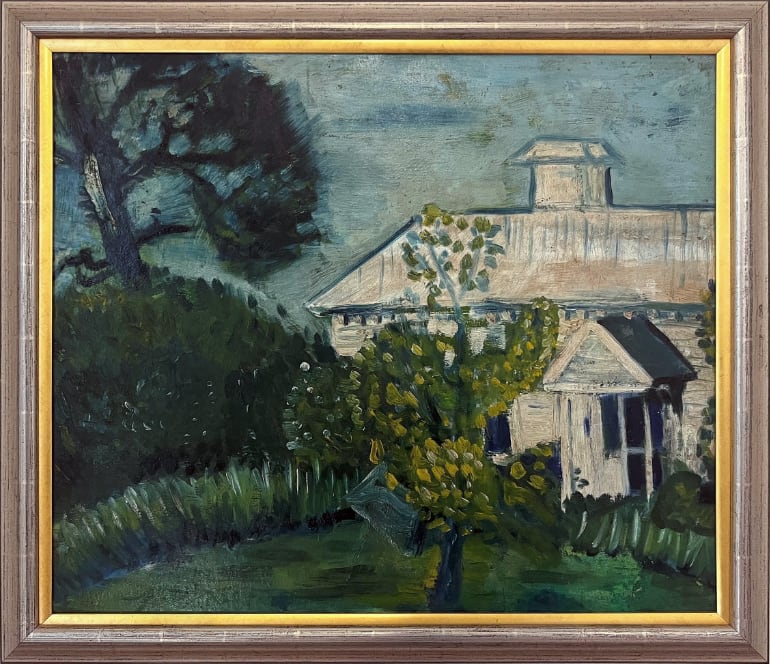
c. 1945 Heide
Made c. 1945 using oil on hardboard. It measures 73 × 84 cm. The work was included in Always Modern: The Heide Story, which was exhibited from 2024 to 2026. It is held in a private collection.
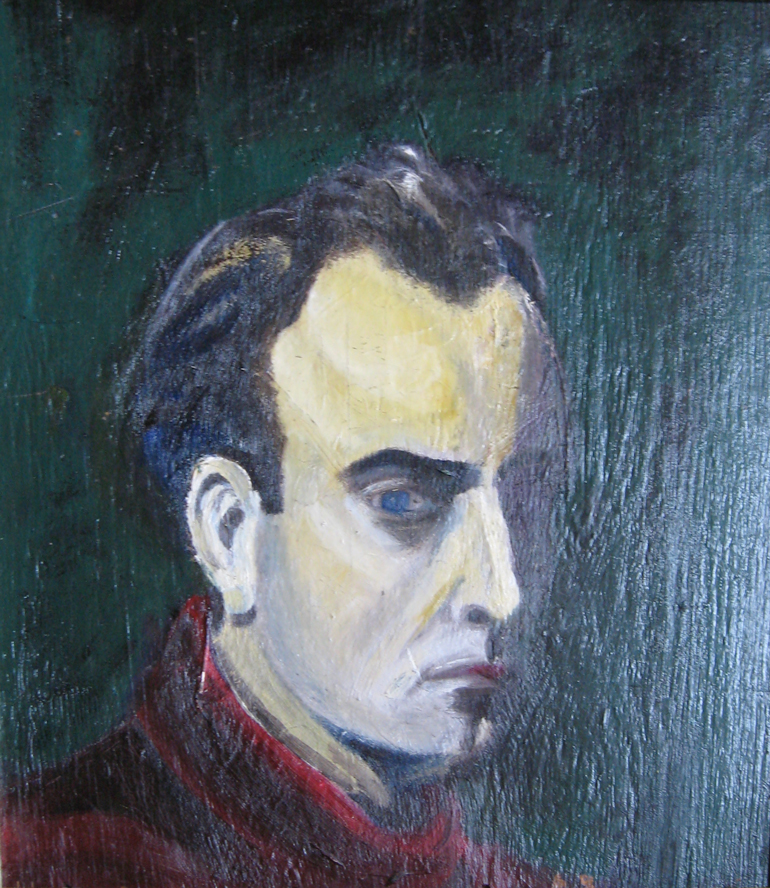
1948 Self-Portrait
Made in 1948, the work uses oil on board and measures 75 × 68 cm. It is held in a private collection.
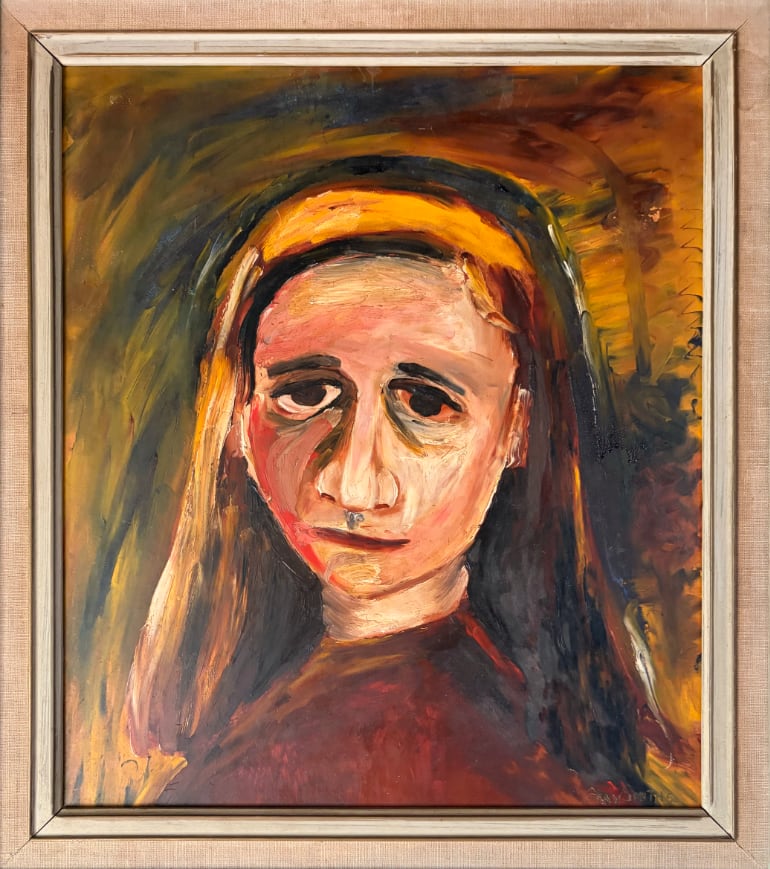
1950 Pauline
Painted in 1950, this oil on masonite work is signed and dated "GRAY SMITH 1950" in the bottom right corner. It measures 60 × 50 cm and remains in a private collection. The work was previously exhibited at Heide Museum of Modern Art.
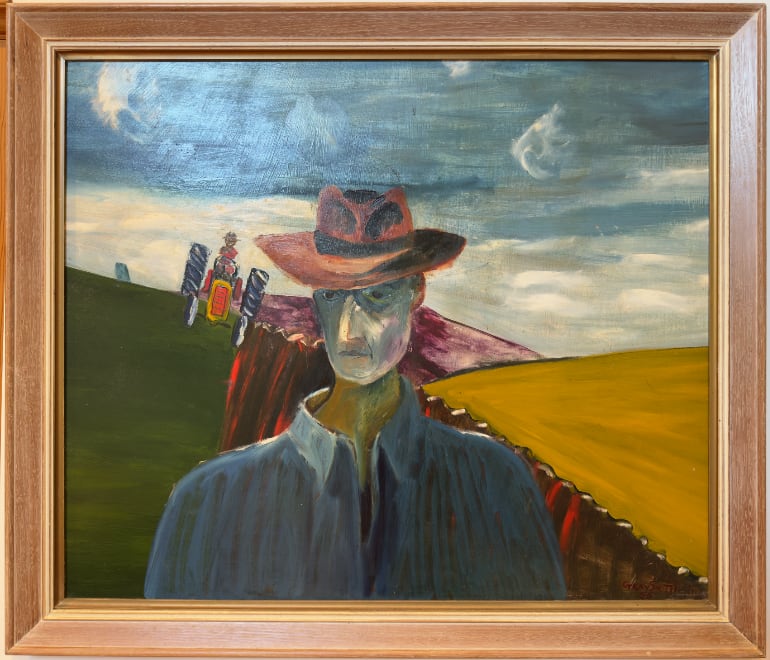
1955 Furrow
Likely shown at Gray’s first solo exhibition at the Gallery of Modern Art, Melbourne. Painted in enamel on masonite, it belongs to a body of work from the mid-1950s that helped define his early style.
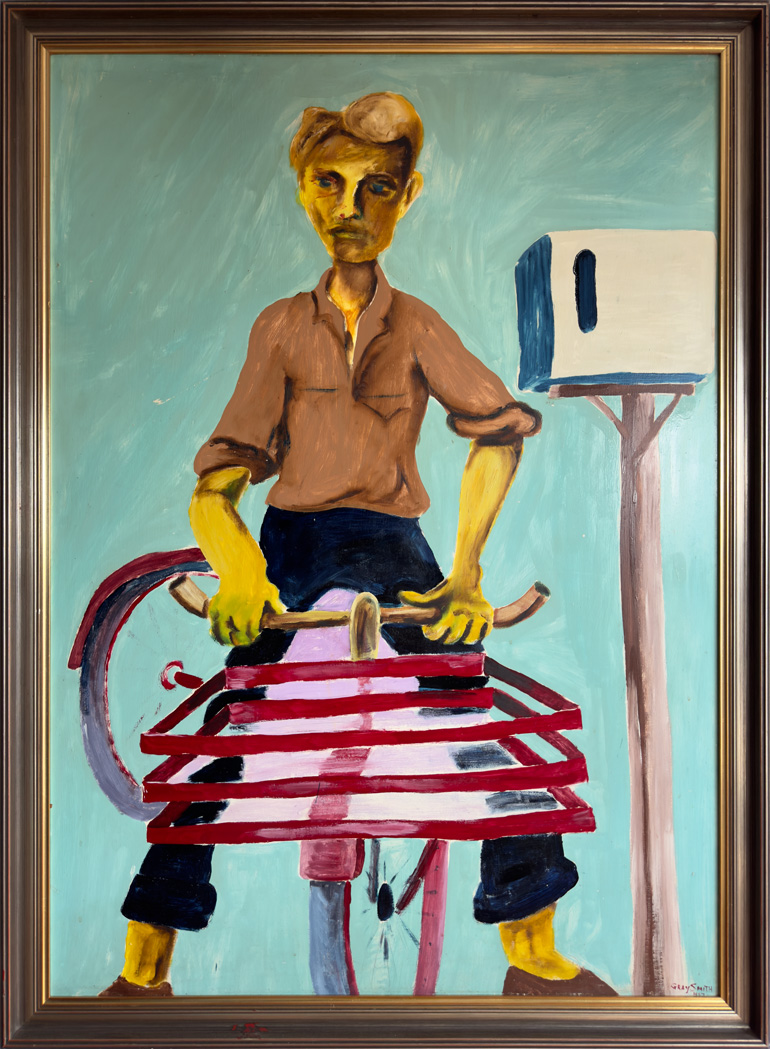
1957 Waiting for the Mail
Made in 1957, the work uses oil on board and measures 119 × 87 cm. It is held in a private collection.
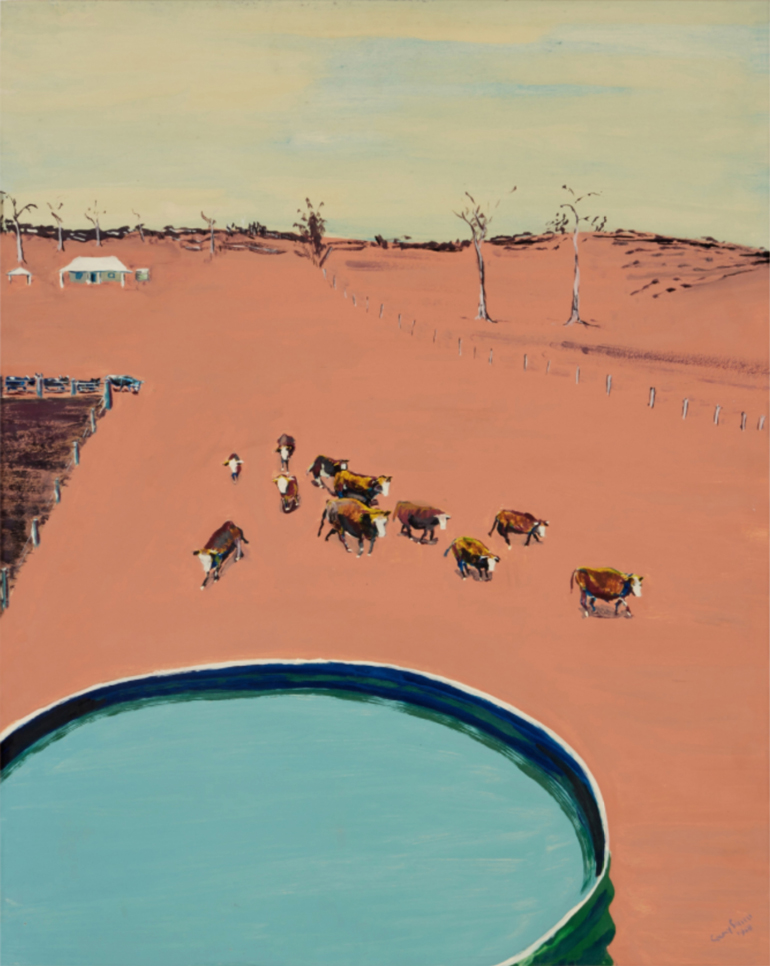
1958 The Tank
Made in 1958, the work uses enamel on board and measures 76 × 61 cm. It was held in the collection of the Museum of Modern Art, New York, from 1963 to 2024 and is now in a private collection.
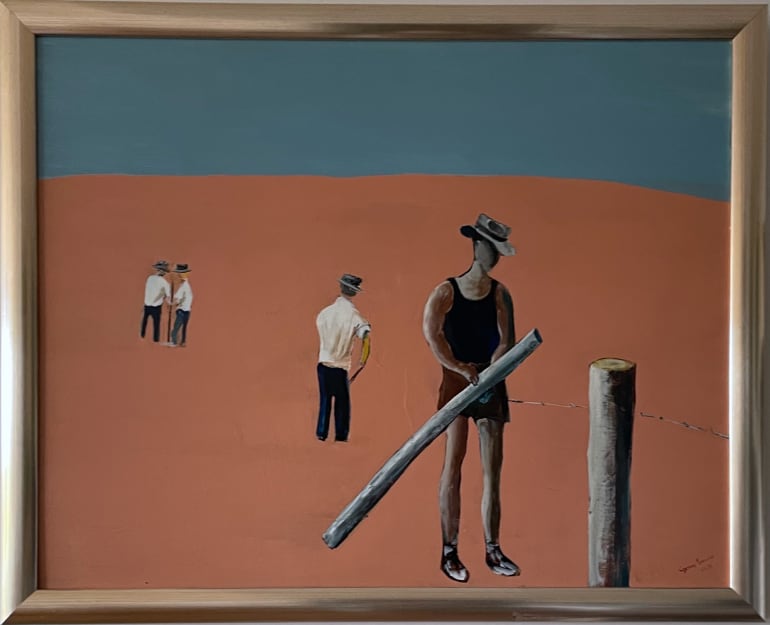
1958 Fencing
Fencing is an early painting by Gray Smith from his first solo exhibition at the Contemporary Art Gallery in Melbourne, held during its transition to the Museum of Modern Art Australia.
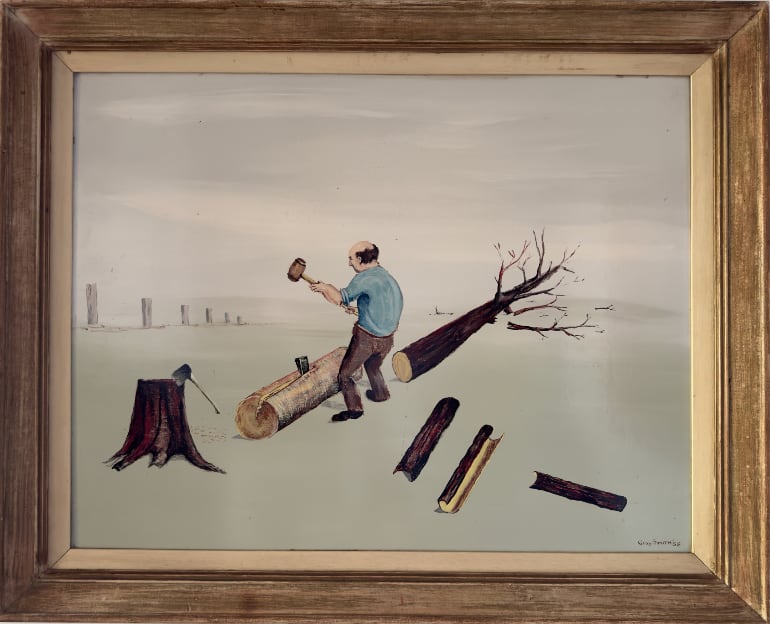
1958 Splitting Logs
Made in 1958, the work uses enamel on board. It is held in a private collection.
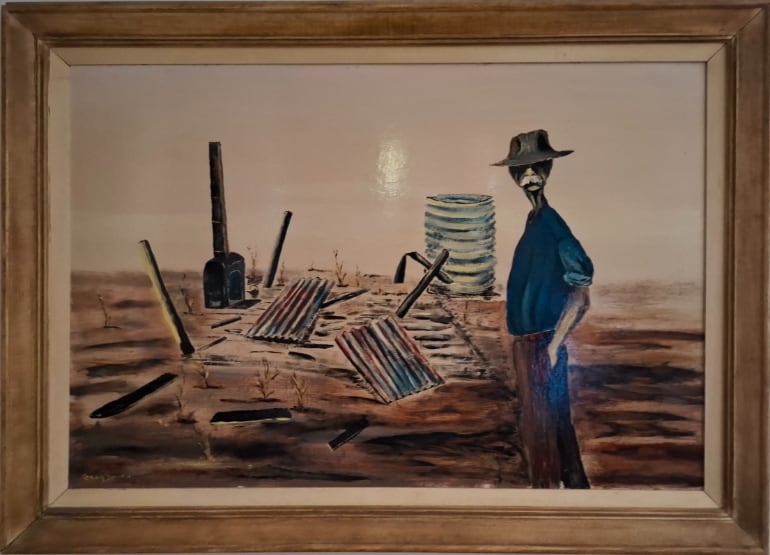
1958 Old Man and Remains of Burnt Out House
A framed painting by Gray Smith showing an elderly man standing beside the remains of a burnt-out house or rural structure. The scene is sparse and dry, with corrugated iron sheets, posts, a tank or stacked cylindrical form, and charred debris scattered across the ground. The figure wears a blue shirt and dark hat, giving the work a strong rural Australian character. The muted browns, pinks and blues create a quiet, desolate mood, suggesting loss, hardship and resilience.
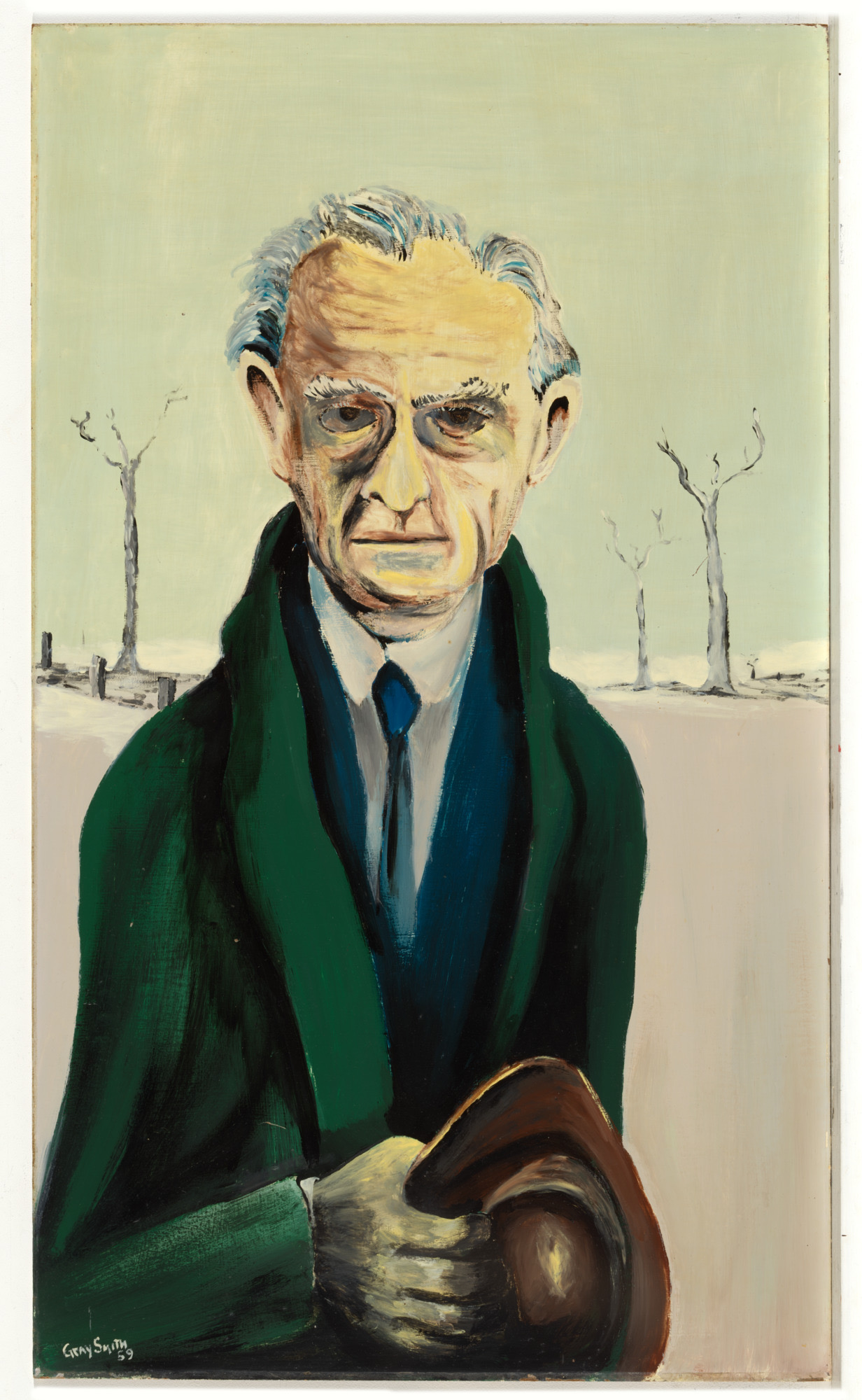
1959 Mr. Johnstone
Made in 1959, the work uses enamel on board and measures 110 × 55 cm. It was exhibited at the Museum of Modern Art in Australia and is held in the collection of the National Gallery of Australia.
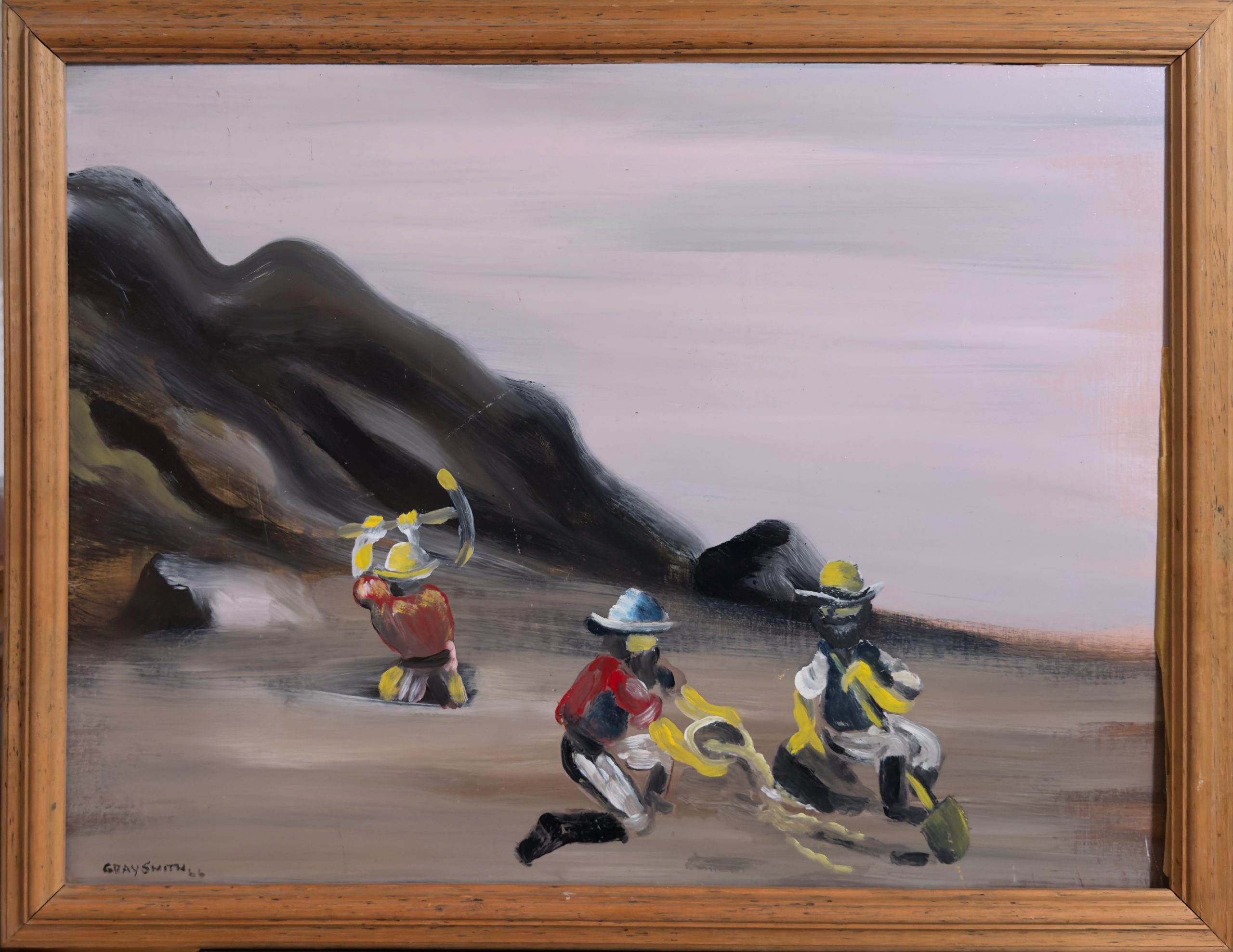
1966 Finding Gold at Duntroon
Made in 1966, the work uses enamel on board and measures 46 × 61 cm. It was included in the exhibition Canberry Paintings: The First 100 Years.
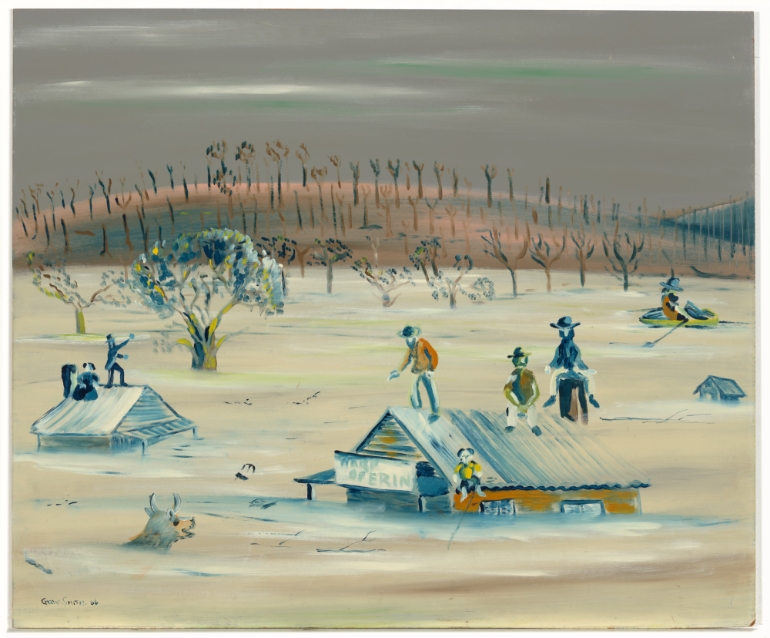
1966 The Harp of Erin Inn Flood
Made in 1966, the work uses enamel on board and measures 55 × 110 cm. It was included in the exhibition Canberry Paintings: The First 100 Years and is held in the collection of the National Gallery of Australia.
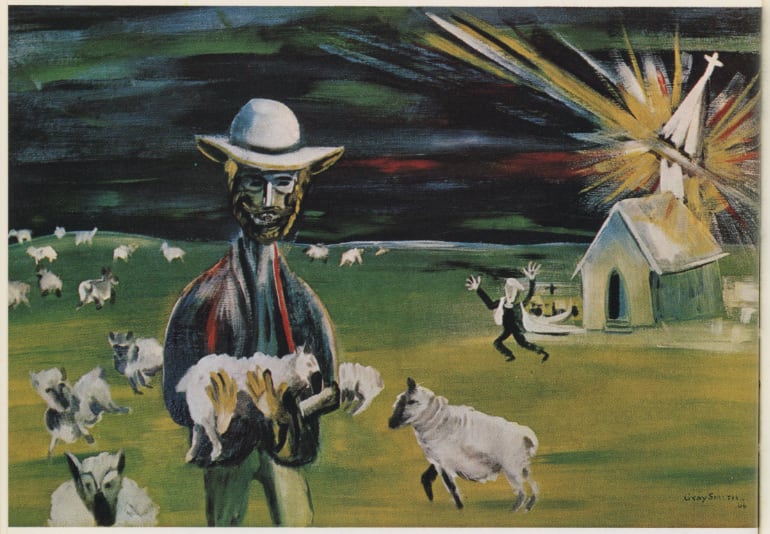
1966 St. John's Struck by Lightning
Made in 1966, the work uses enamel on board. It was included in the exhibition Canberry Paintings: The First 100 Years and is held in a private collection.
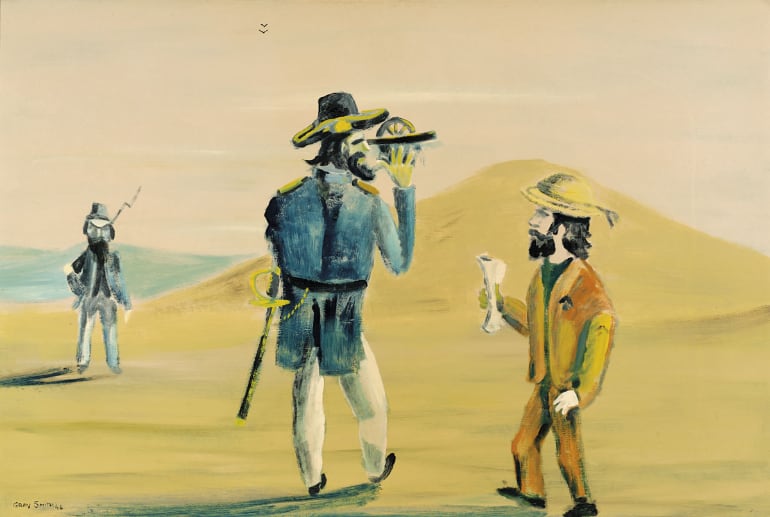
1966 First Sight of Canberra
Made in 1966 using enamel on board. It measures 61 × 91.5 cm and is held in a private collection. The work was included in the 1966 exhibition The Canberry Paintings: The First Hundred Years.
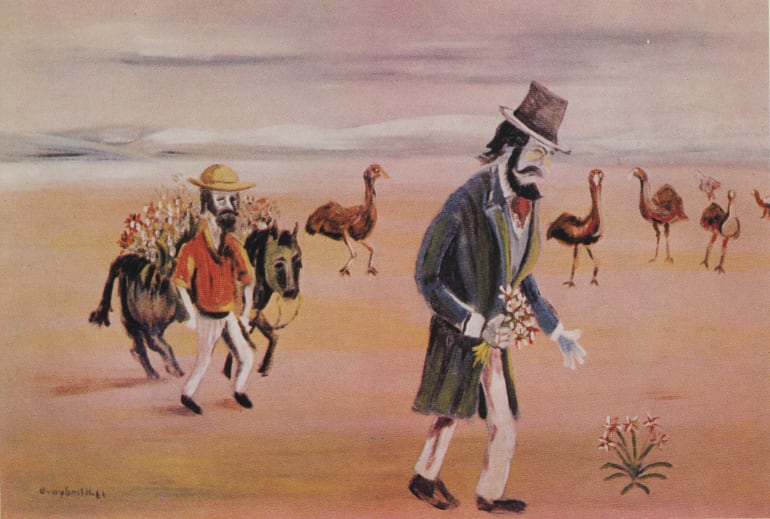
1966 Alan Cunningham - Botanist
Made in 1966, the work uses enamel on board. It was included in the exhibition Canberry Painting: The First Hundred Years and is held in a private collection.
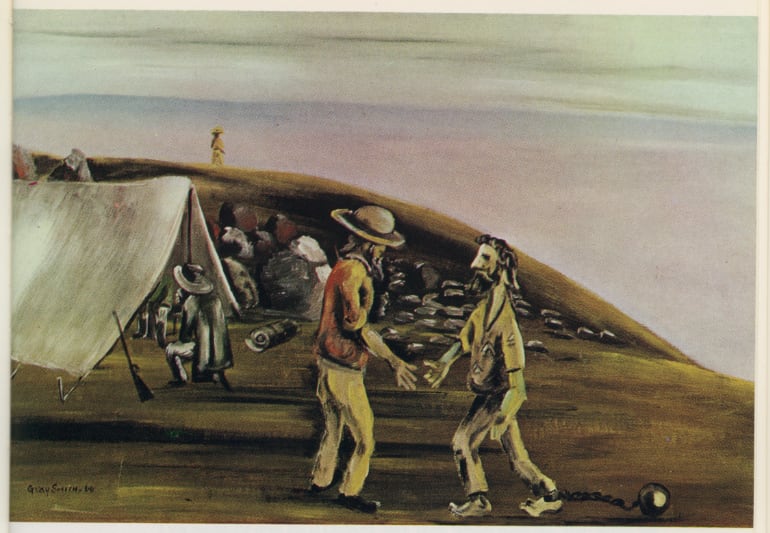
1966 New Recruit
Made in 1966 using enamel on board. It is held in a private collection. The work was included in the 1966 exhibition The Canberry Paintings: The First Hundred Years.
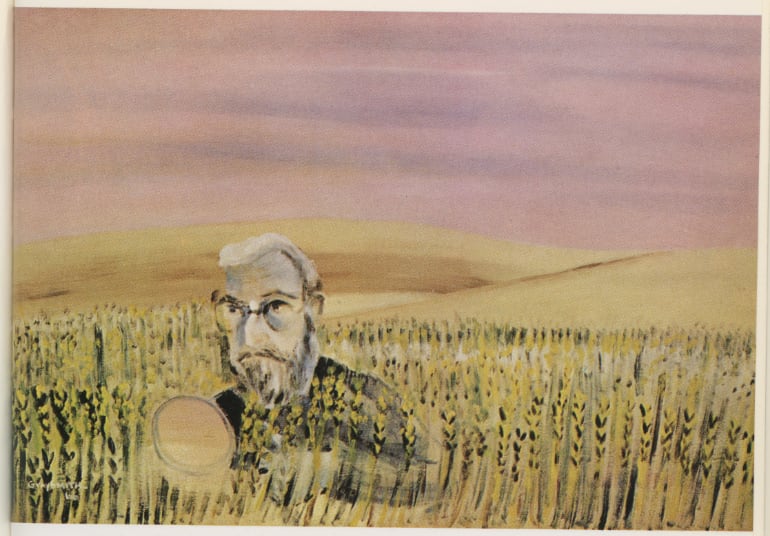
1966 William Farrer’s Experiments
Made in 1966 using enamel on board. It is held in a private collection. The work was included in the 1966 exhibition The Canberry Paintings: The First Hundred Years.
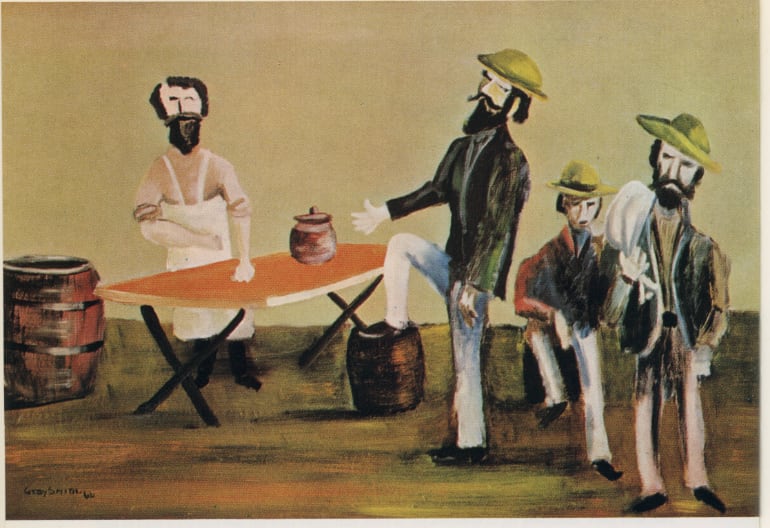
1966 10, 10, 2 & ¼ – No Fat
Made in 1966 using enamel on board. It is held in a private collection. The work was included in the 1966 exhibition The Canberry Paintings: The First Hundred Years.
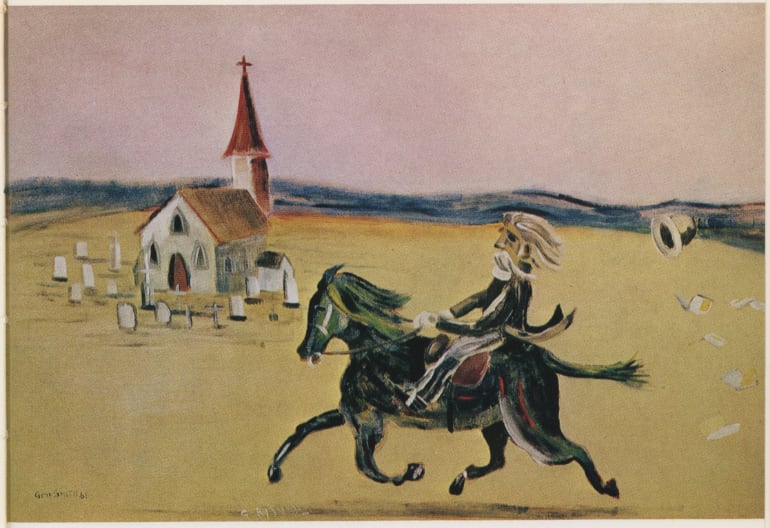
1966 The Galloping Parson
Made in 1966 using enamel on board. It is held in a private collection. The work was included in the 1966 exhibition The Canberry Paintings: The First Hundred Years.
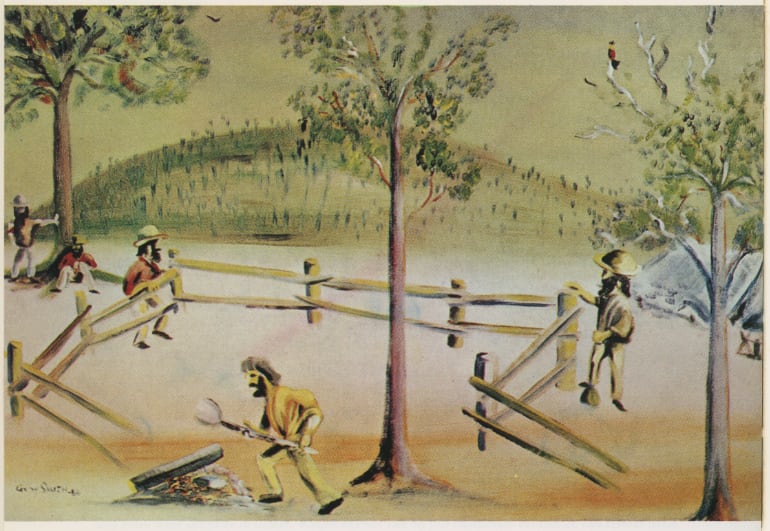
1966 Stockyards at Actin
Made in 1966 using enamel on board. It is held in a private collection. The work was included in the 1966 exhibition The Canberry Paintings: The First Hundred Years.
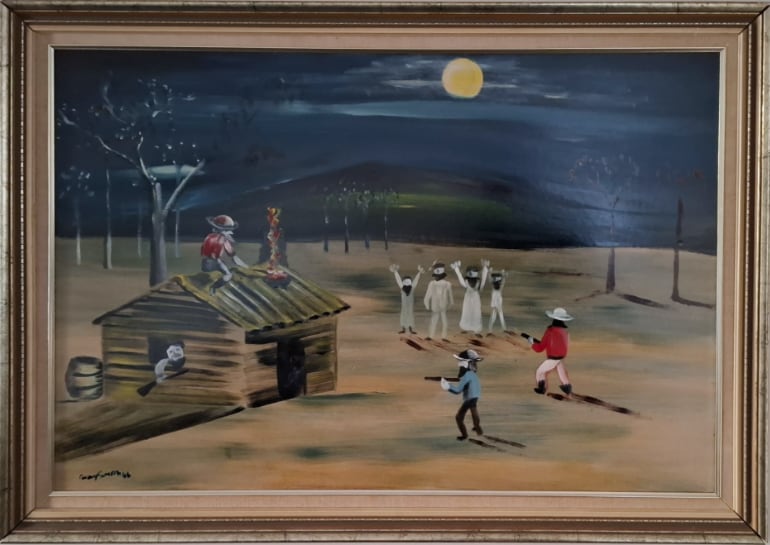
1966 Sticking Up Moore's Station
Based on the original exhibition catalogue, Sticking Up Moore’s Station depicts the 1828 incident when Tennant and Rix held up Moore’s station, placed Moore’s men under guard, tried to burn Mr Cowan out of his hut, then took food and left.
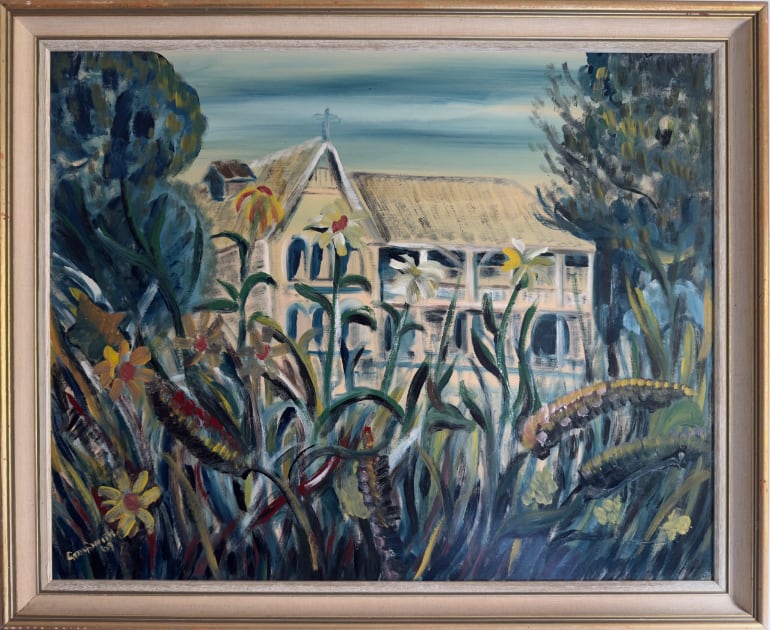
1967 The Rectory (Le Presbytère)
Made in 1967, the work uses oil on board and measures 60 × 75 cm. It was exhibited in 1967 at the home of Henri Souillac French Cultural Attaché in Canberra and in 1968 in Deux Aspects de la Peinture Australienne: Gray Smith, Arthur Wicks at the Cité Internationale des Arts.
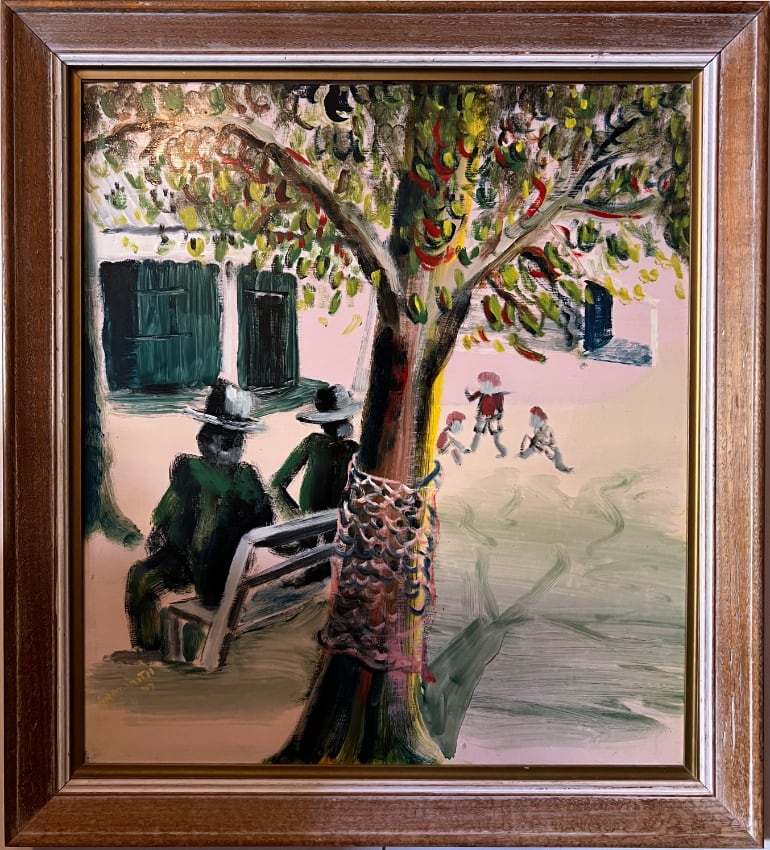
c. 1967–68 Retour à notre enfance
Likely painted during Gray Smith’s 1967–68 trip to Paris and the United Kingdom, shortly after the Canberry series, Retour à notre enfance reflects a reflective phase during his time overseas.
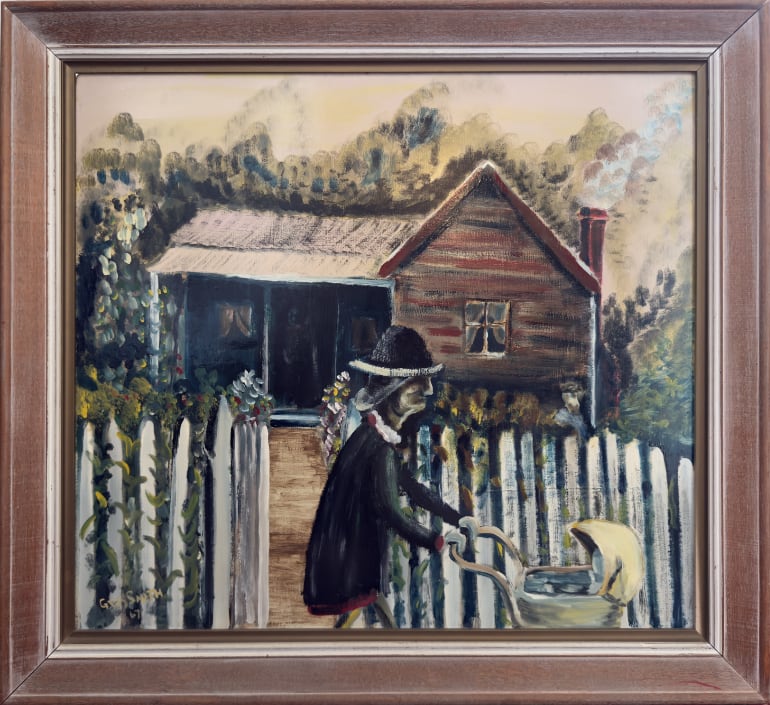
1967 My Father's House (La Maison de Mon Père)
My Father’s House, titled in French on the back as La Maison de Mon Père, appears to have been painted for Gray Smith’s 1967 preview exhibition at the Canberra home of Henri Souillac, Cultural Attaché at the French Embassy.
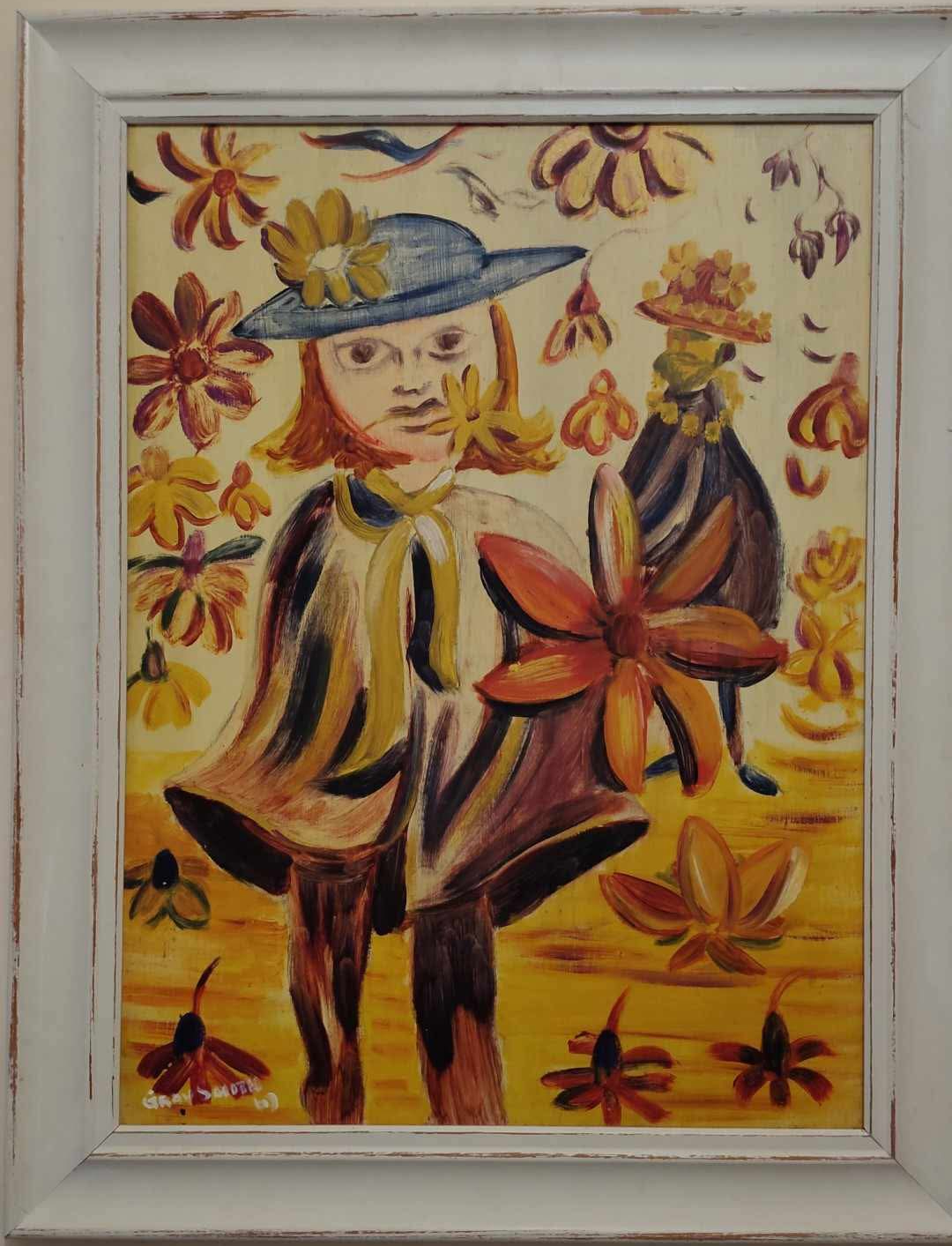
1967 Falling Flowers
Exhibited at the Australian Sculpture Gallery in 1968. Painted in Paris. A young woman in a blue bonnet, surrounded by falling flowers.
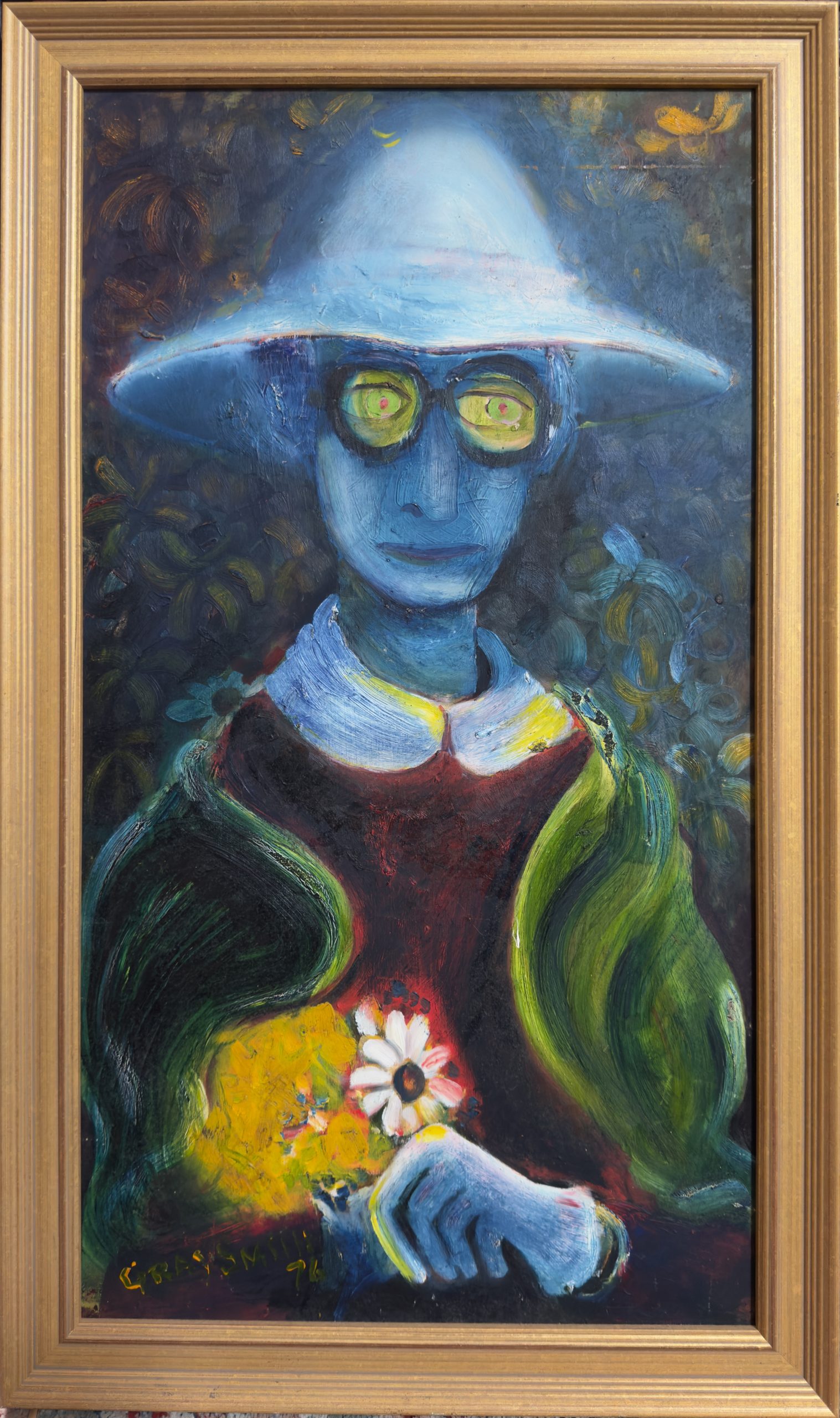
1976 Daisy Bates
Made in 1976, the work uses oil on board. It measures 89 × 48 cm.