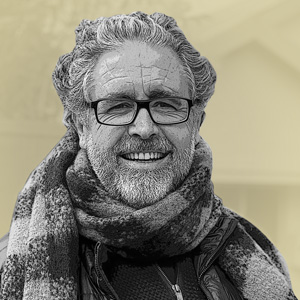
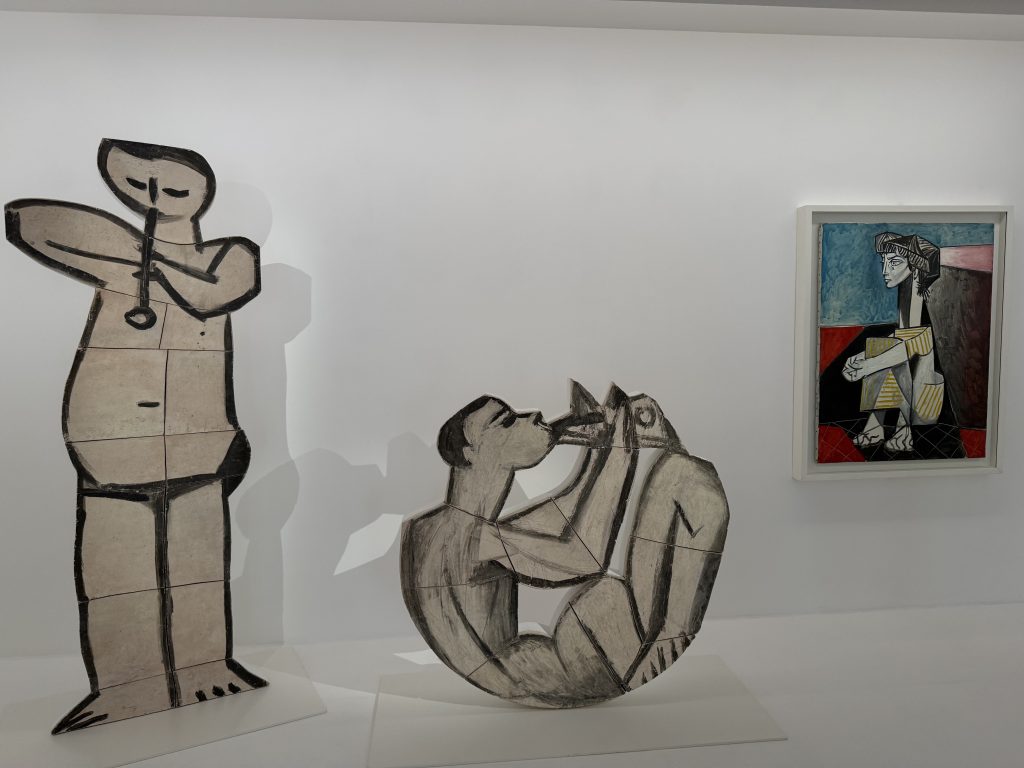
The same pattern shows up, in a quieter way, in Gray Smith.
When Gray arrived in Paris in the late 1960s, he stepped into a similar environment. Not the same circle as Picasso, but the same city that had long been an inspiration for artists. He was based at the Cité Internationale des Arts, moving through galleries, exhibitions and conversations. He was there with fellow Australian artist Arthur Wicks, his wife Joan and his five children, sharing in that same push to see more and test more.
Sometime in 1967 or 1968, Gray saw a Matisse exhibition.
We only know that because his son, Perry, sent me a note. But once you look, it’s hard to miss.
Falling Flowers (1967) feels different to Gray’s other works. A woman stands amid large, simplified blooms. The colour is direct. The handling looser. The figure flattens into shape and pattern rather than volume. It has that decorative, almost cut-out quality you see in Matisse. It’s not imitation, but it is clearly a response.
A moment.
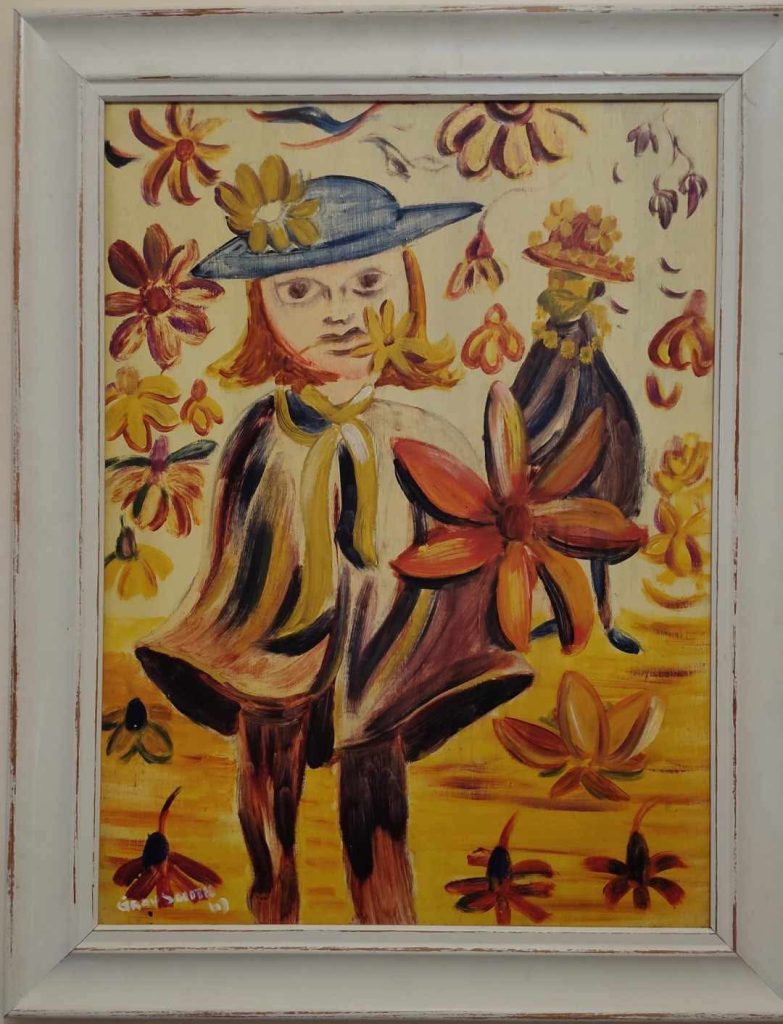
Gray Smith, Falling Flowers
© Smith Estate.
What Picasso and Gray share is not style or scale. It’s this pattern of influence. Both were open to being changed by what they saw. Both absorbed ideas and then pushed them through their own sensibility.
Picasso did it repeatedly. Cézanne, African sculpture, Iberian forms, Matisse. Each encounter triggered a shift. Even later in life, after his style had settled, he kept circling back, reworking ideas, producing variations at speed.
Gray’s shifts are less documented (but I hope to change that), but they’re there if you look. His time with Max Meldrum in the 1940s gave him a foundation, even if he pushed against it. His involvement with the Heide Circle placed him among artists already stretching Australian modernism. Then Paris offered another jolt.
What’s interesting is how these moments show up in the work. Not as a clean break, but as a change in emphasis. A different way of seeing.
Picasso had the advantage of scale. He produced relentlessly. Hundreds of variations, across painting, sculpture, ceramics, even poetry (like Gray). If one idea didn’t work, it didn’t matter. Another would follow. Financial security gave him the freedom to keep testing.
Gray didn’t have that same volume or safety. And in the case of Falling Flowers, the shift seems to be a one-off. But the instinct to respond to what he encountered was still there.
There’s also something else the museum made clear. The works we see shape the story we tell about an artist. The Musée Picasso is largely made up of works Picasso still owned when he died. Pieces that weren’t widely seen at the time. They didn’t become famous because they weren’t in circulation.
It makes you wonder about Gray.
What did he produce in Paris that wasn’t exhibited? What sat in his backyard studio in Canberra, or in the storage room at the Canberra Hospital where he worked with children with disabilities, or returned to Australia quietly? How much of his development is hidden simply because the work wasn’t seen? Likely quite a lot.
If Picasso teaches us anything, it’s that the full picture of an artist only emerges when you see the experiments as well as the recognised works.
And if Gray’s Falling Flowers is anything to go by, one exhibition in Paris was enough to leave a mark.
If you have any ideas to add or if I got something wrong, please let me know. I’m always looking to improve what we know.