Shawn Callahan
Hi, I’m Shawn Callahan, Gray Smith’s son-in-law. A few years ago, I wrote his Wikipedia page, which sparked a deeper dive into his life and work. Since then, I’ve been gathering stories, digging into archives, and speaking with Gray’s family—who’ve been incredibly supportive—to tell his full story. I’m also the author of Putting Stories to Work, an award-winning and best-selling book on business storytelling. Please join me in uncovering the full story of Gray Smith’s life.”
All Posts


One Response
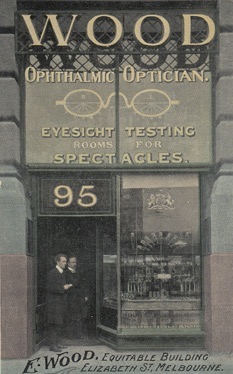
I’m amazed at what you can find online. I first learned about Gray starting at E. Wood and Sons in the Heide archives, and thought I’d try a quick search to see if anything about the business still existed. That’s how I stumbled on the Australian College of Optometry Museum and this postcard showing the shopfront at 95 Elizabeth Street. A small but lovely find from Gray’s first job.
I’m not sure when the photo was taken, but it looks like something from the early twentieth century. What’s your best guess? I’d love to know.