John Reed edited a small book in 1963 where he pulled together 45 Australian artists “who have added something new and vital to our art in the past ten years.” It’s a fascinating snapshot of who Reed thought mattered at that moment.
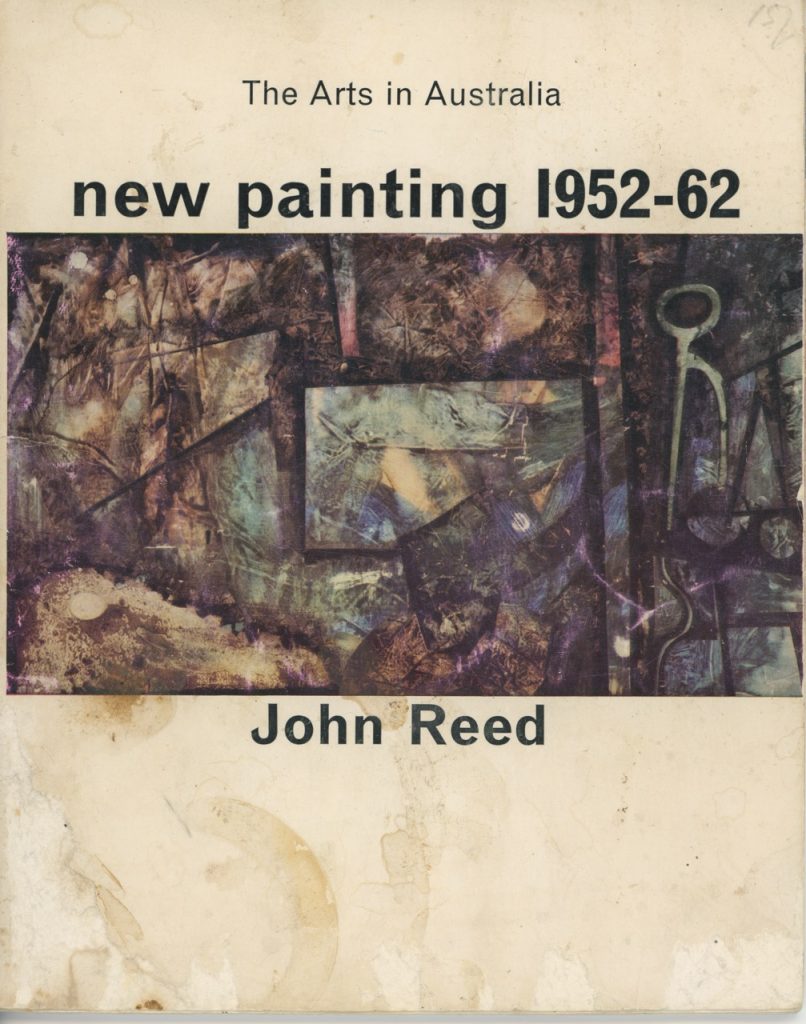
You get the big names you’d expect: Fred Williams, Sidney Nolan, Brett Whiteley, Mirka Mora, John Olsen and John Perceval. What stands out is who isn’t there. Joy Hester, for example, is missing. Given her importance now, it tells you something about how uneven recognition was at the time.
Reed wasn’t just any editor making a list. By the early 60s he was at the centre of Australian modern art. Through Heide, he and Sunday Reed supported and shaped the careers of many of the artists who are now seen as central to the story of modernism here. Reed had an eye for emerging talent and he backed artists early. Being included in one of his projects wasn’t lightweight. It signalled that you were part of the conversation about what Australian art could be.
And Reed clearly thought highly of Gray. A few years earlier he had selected Gray’s painting The Tank to send to the Museum of Modern Art in New York. It was part of an effort to show American curators that Australian modernism was alive and kicking. That decision tells you where Reed placed Gray in the field. He wasn’t a fringe figure. Reed saw him as someone worth putting in front of the world’s most influential museum. I’ve written about that moment here.
Each artist in the 1963 book was asked to say something about their work or themselves. Reed said he “invited each painter to make his own statement” and that the responses were surprisingly revealing.
Gray Smith appears with his portrait of Mr Johnstone, which I’ve included below. The original hangs in the National Gallery of Australia.
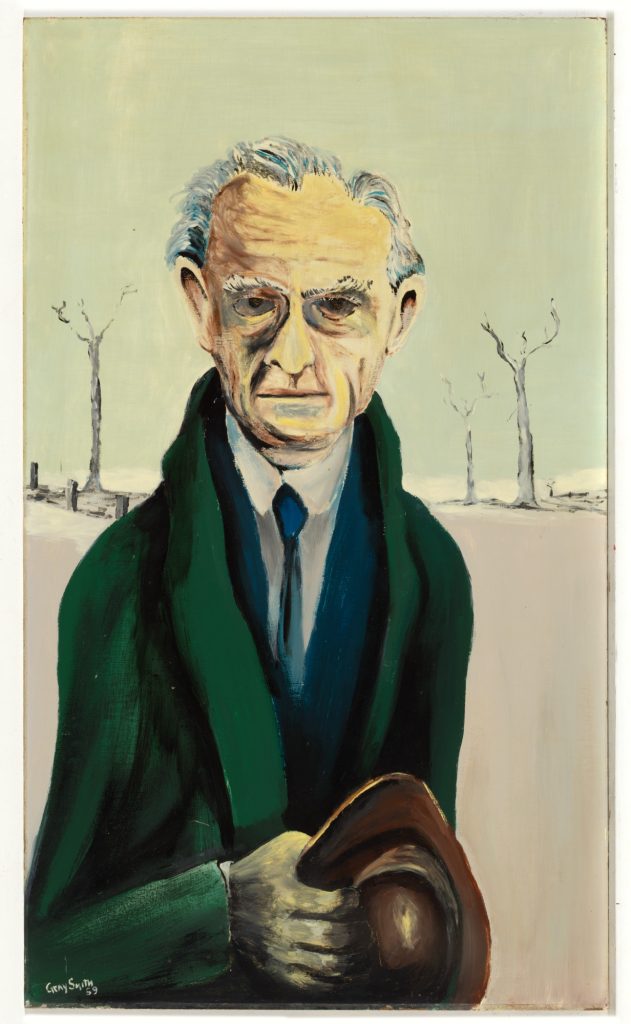
© Smith Estate. Used with permission via CAL.
Perry Smith, Gray’s son, shared a lovely detail about this work. Mr Johnstone was the father of Johnno Johnstone, one of Gray’s closest friends right up until the family moved to Canberra. Johnno helped build the dam at Hurstbridge, and Perry thinks the photos of that work are now at Heide. It gives the painting another layer. This wasn’t an imagined subject. It was someone tied into the rhythms of Gray’s everyday life.
What Gray wrote about himself is worth sitting with. He talked about the long drought during his childhood, sheep being driven into parks and gardens to find the last scraps of grass, and the stories his mother told him about the early bush. His grandfather had covered the Ned Kelly saga as a reporter and saw Kelly hanged. For Gray, these stories weren’t distant folklore. They were part of the world he grew up in.
When he finally got out to the bush as a young man, working on timber trucks and later hobby farming to survive, it confirmed what he’d been carrying since childhood. He linked those early experiences and family stories to the images he made. He saw them as central to his identity. As he put it, he was “trying through a tangible thing to communicate the intangible.”
It’s a short statement, but it gives you a clear line to follow through his work. The outback, drought, toughness and the characters who shaped Australia’s early imagination weren’t just subjects for him. They were the soil he grew out of.
Reed, John, ed. New Painting 1952–62. The Arts in Australia. Melbourne: Longmans, 1963.